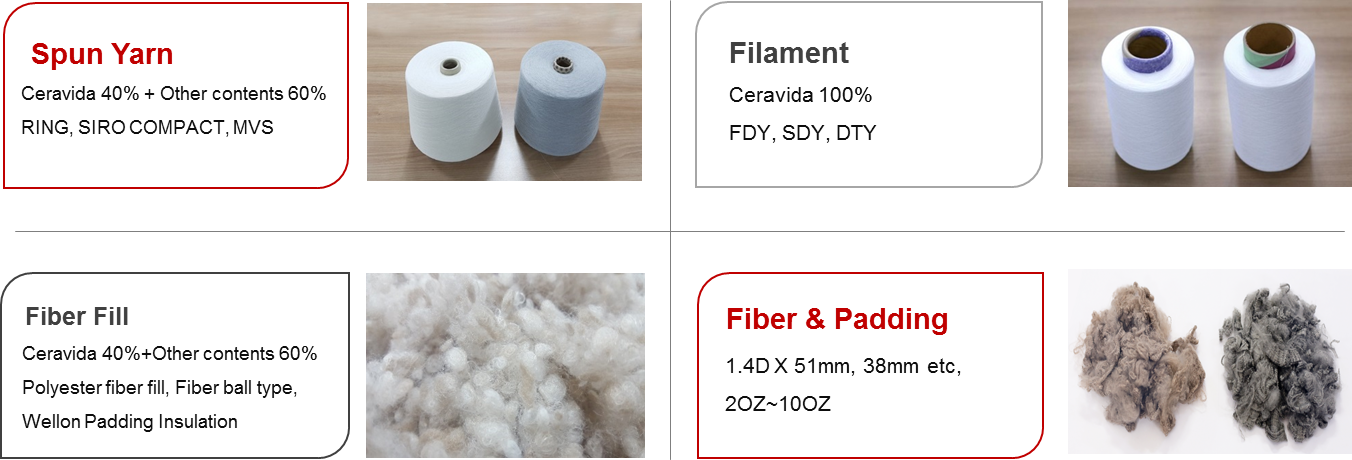










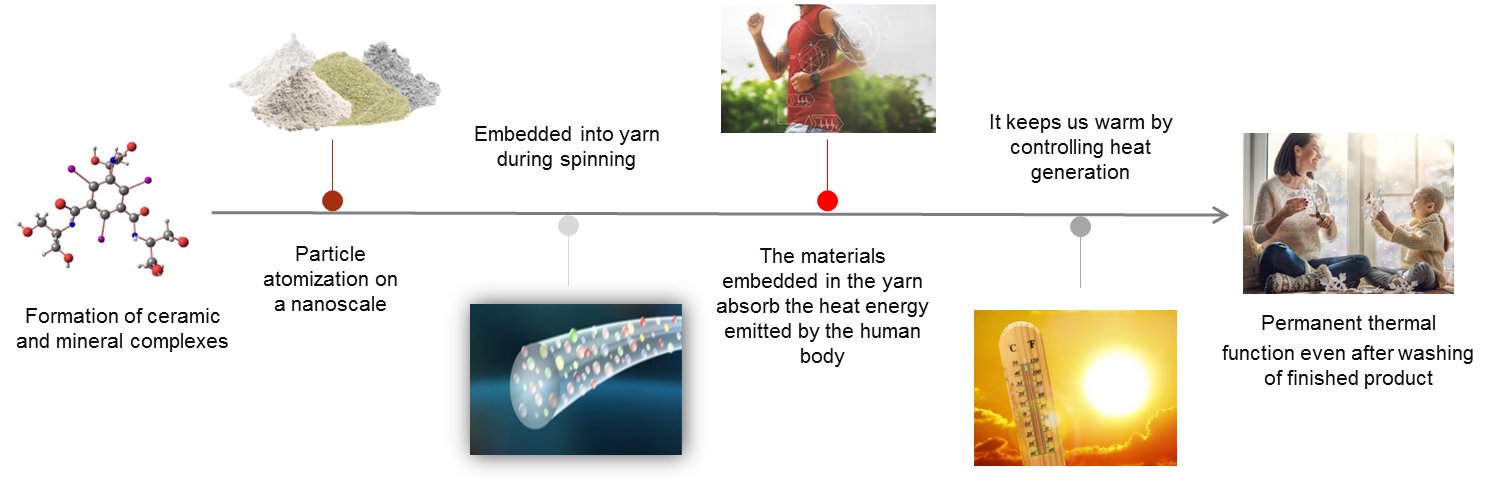
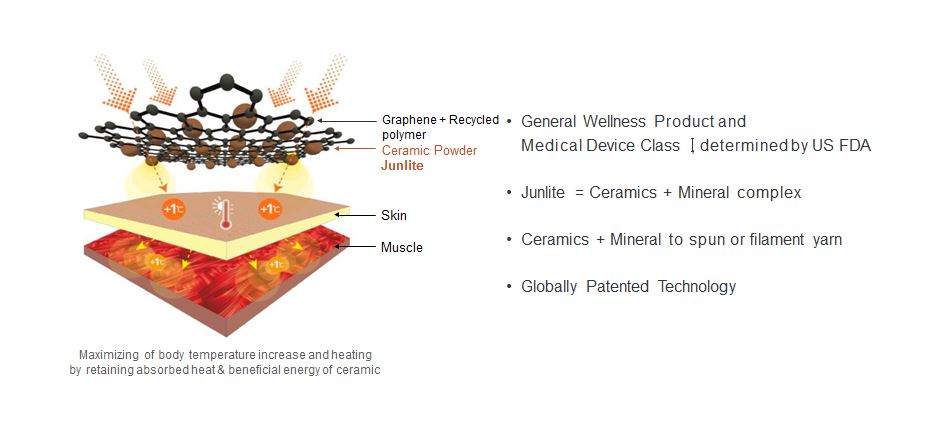
Technology capable of controlling heat by generating heat by means of Ceravida embedded in yarn.

Technology that can maximize body temperature to keep us warm.





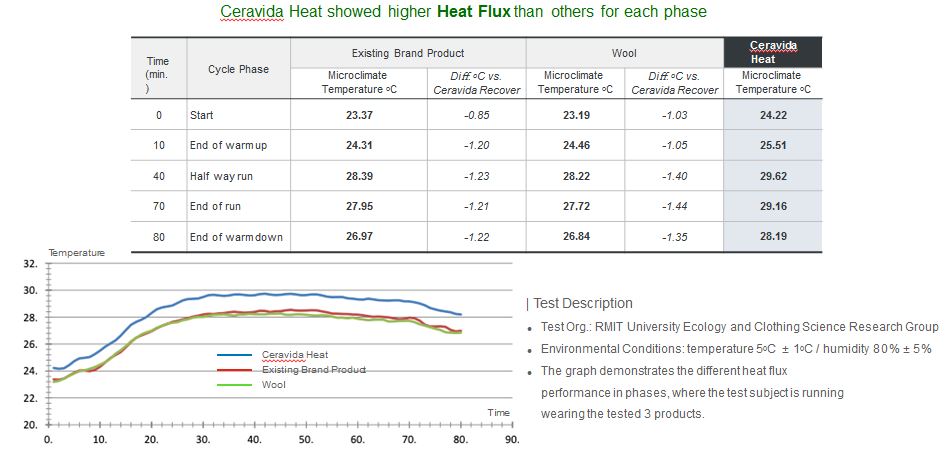
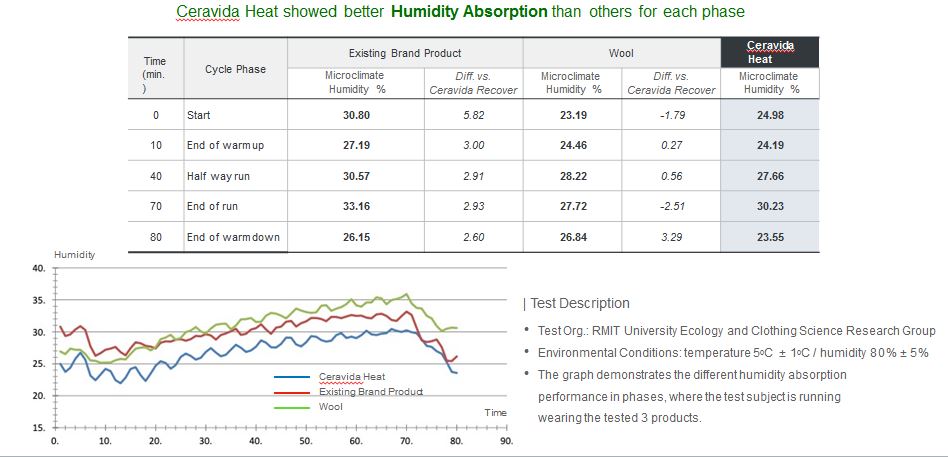
RMIT is the Royal Melbourne Institute of Technology.
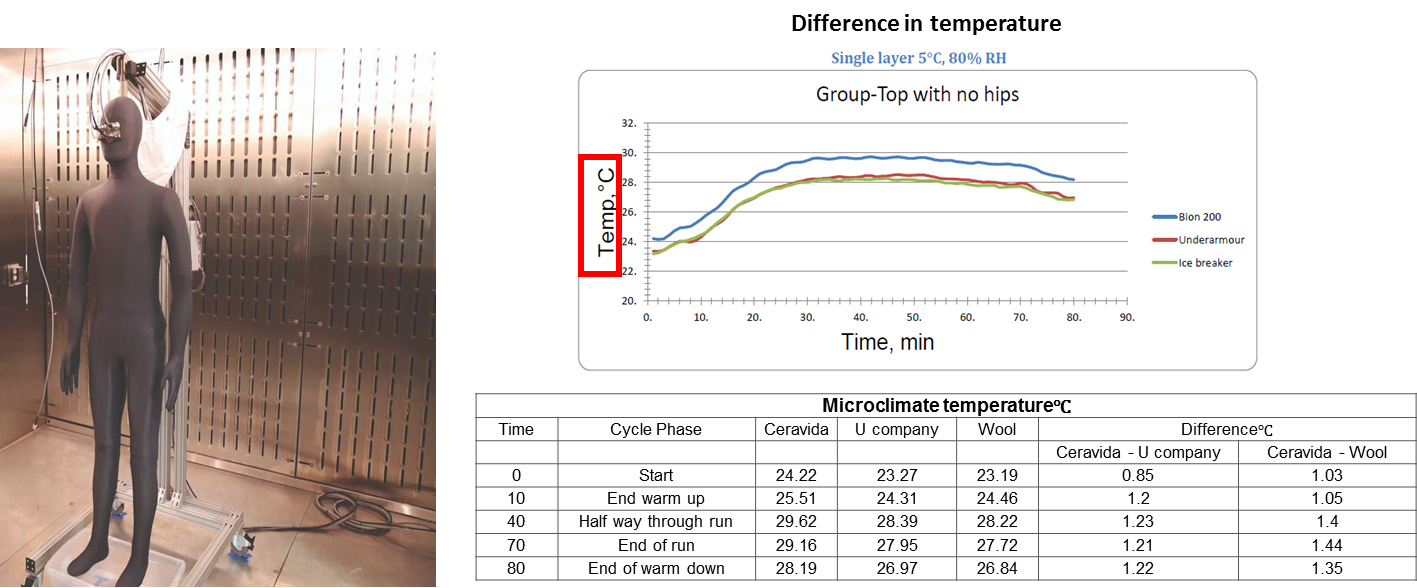
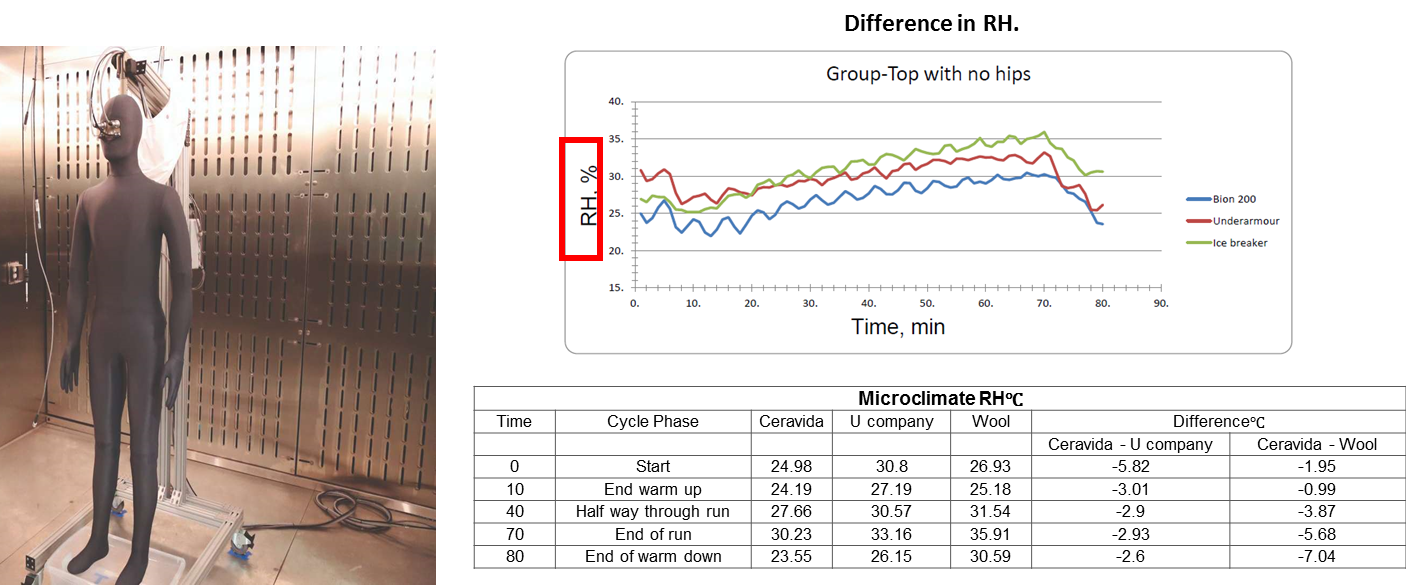
Test data indicates Ceravida Heat outperforms like-for-like wool-based product.
RMIT is the Royal Melbourne Institute of Technology.
Test data indicates Ceravida Heat outperforms like-for-like wool-based product.
Light absorption heat-retaining property condition
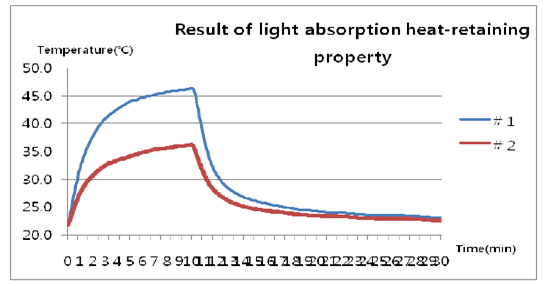
Heating element : IWASAKE Co. 220 V / 500W / 3200 K,
Light exposure distance : 30 cm
Near sunlight irradiated on the face side of the specimen
Temperature sensor attached below the test specimen,
Testing time : Light on for 10 min and light off for 20 min
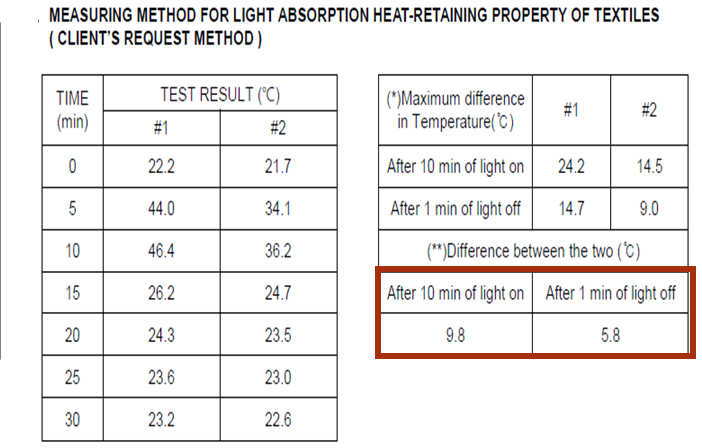
* Maximum difference in temperature (℃) = Maximum temperature (℃) – beginning temperature (℃)
** Difference between the two (℃) = Temperature difference of test sample (℃) – Temperature difference of control sample (℃)
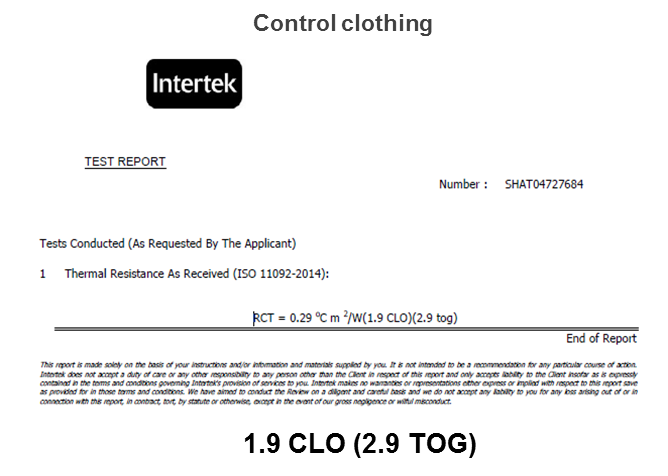
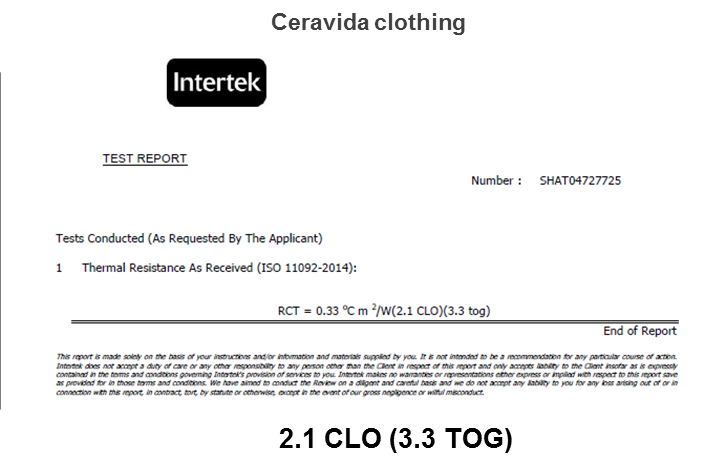
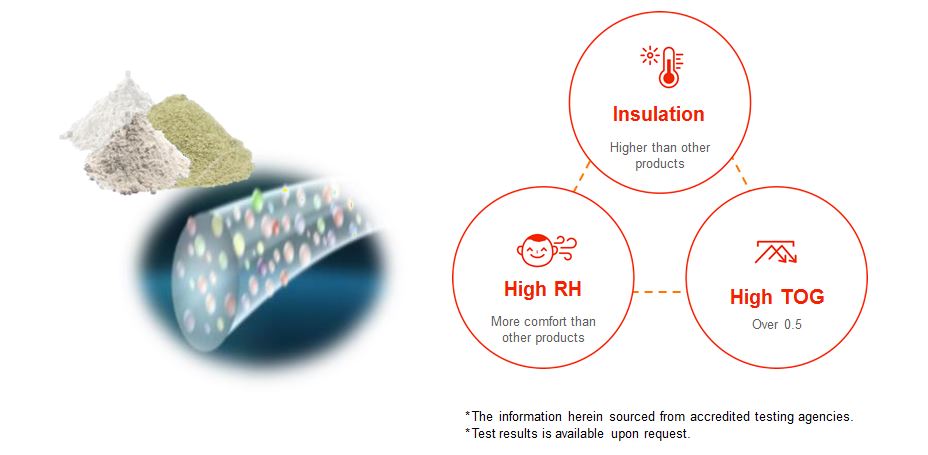
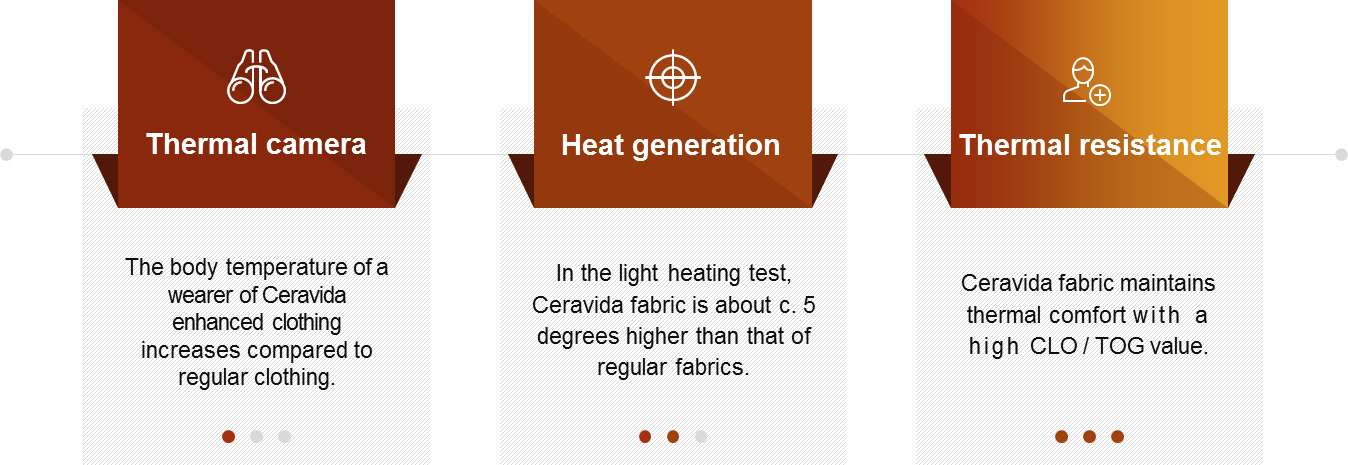
The concept of CLO values (clothing insulation) is to maintain the normal skin temperature of a person when there is no wind, the temperature is 21 degrees Celsius (70 degrees Fahrenheit), and the calorific value of one square meter per hour is 50 kilocalories. It is a measure of the insulation (thermal resistance) provided by an article of clothing and the higher it is, the higher the insulation effect. Ceravida’s clothing shows higher CLO and TOG values than control clothing.